

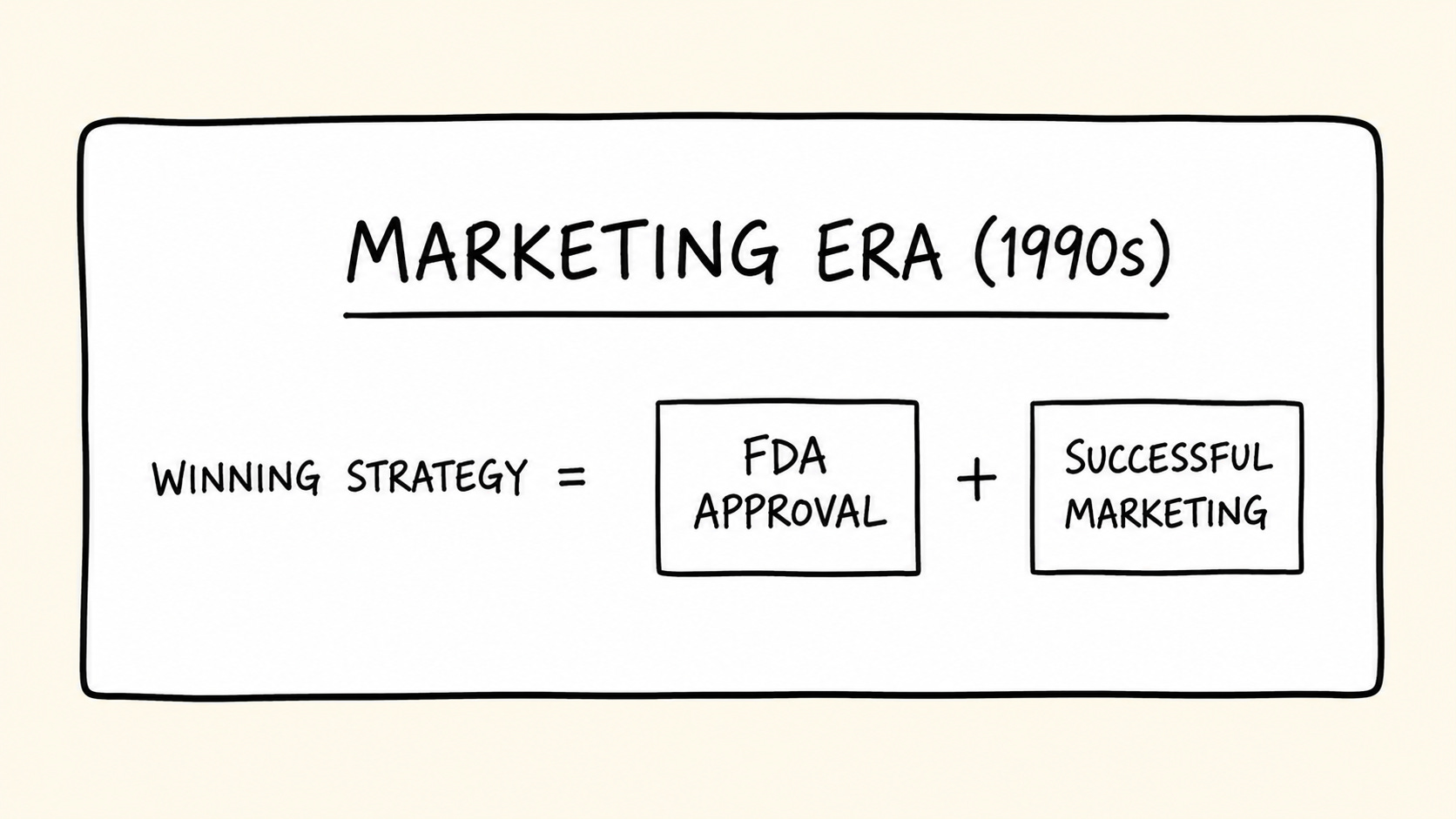
In the 1990s, the winning strategy for US biopharmaceuticals was: 1) get the drug approved by the FDA, and 2) drive awareness through successful marketing.
Let’s call this the “Marketing Era”.
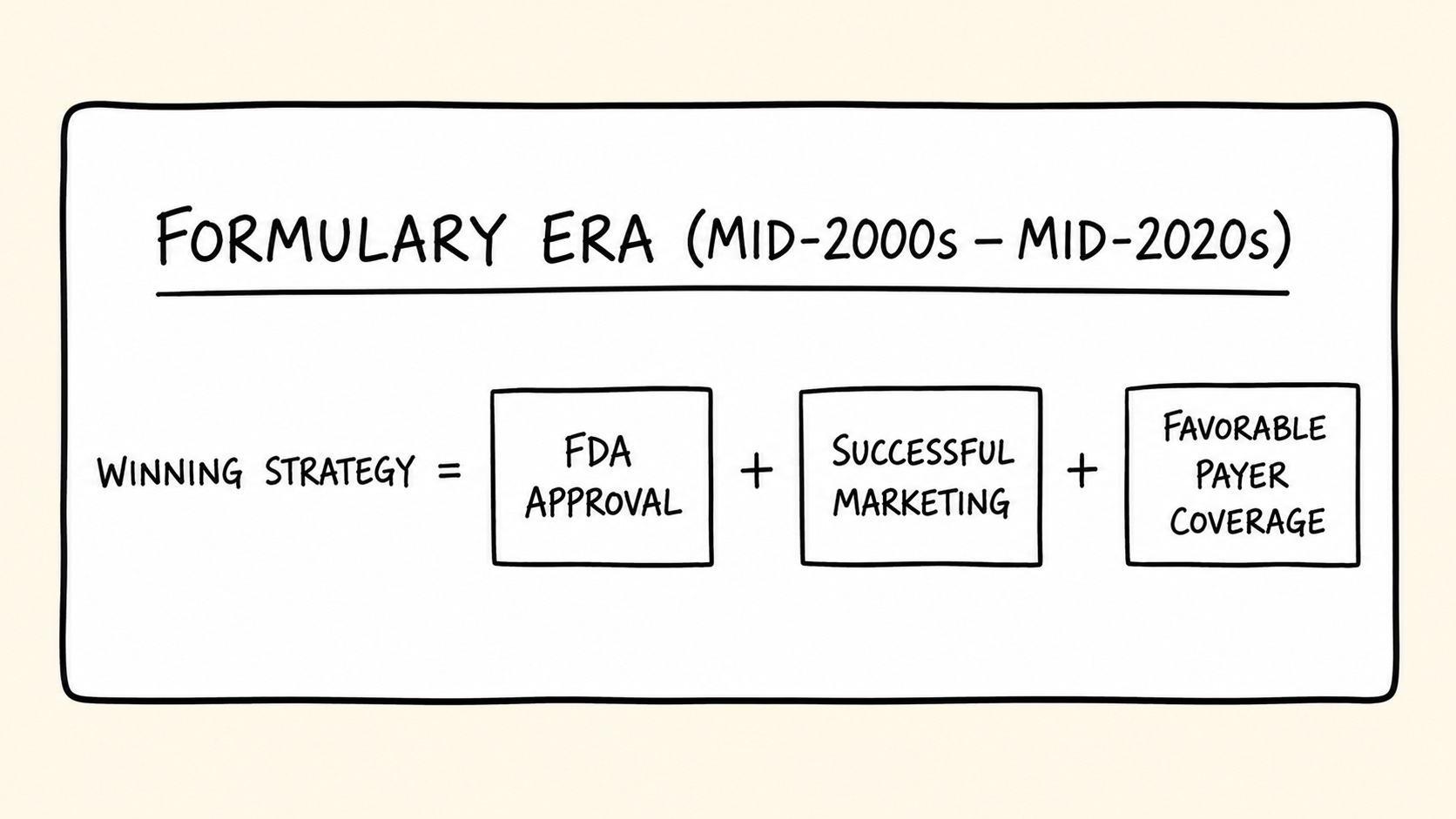
By the mid-2000s we had entered a new competitive era, brought about by the rise of PBMs and expanded drug coverage through Medicare Part D.
Let’s call this the “Formulary Era”.
In the Formulary Era, FDA approval and successful marketing were still necessary but no longer sufficient. Winning strategies sought favorable payer coverage and low access hurdles for patients. Preferred formulary positioning was a competitive edge since it meant easier access for patients.
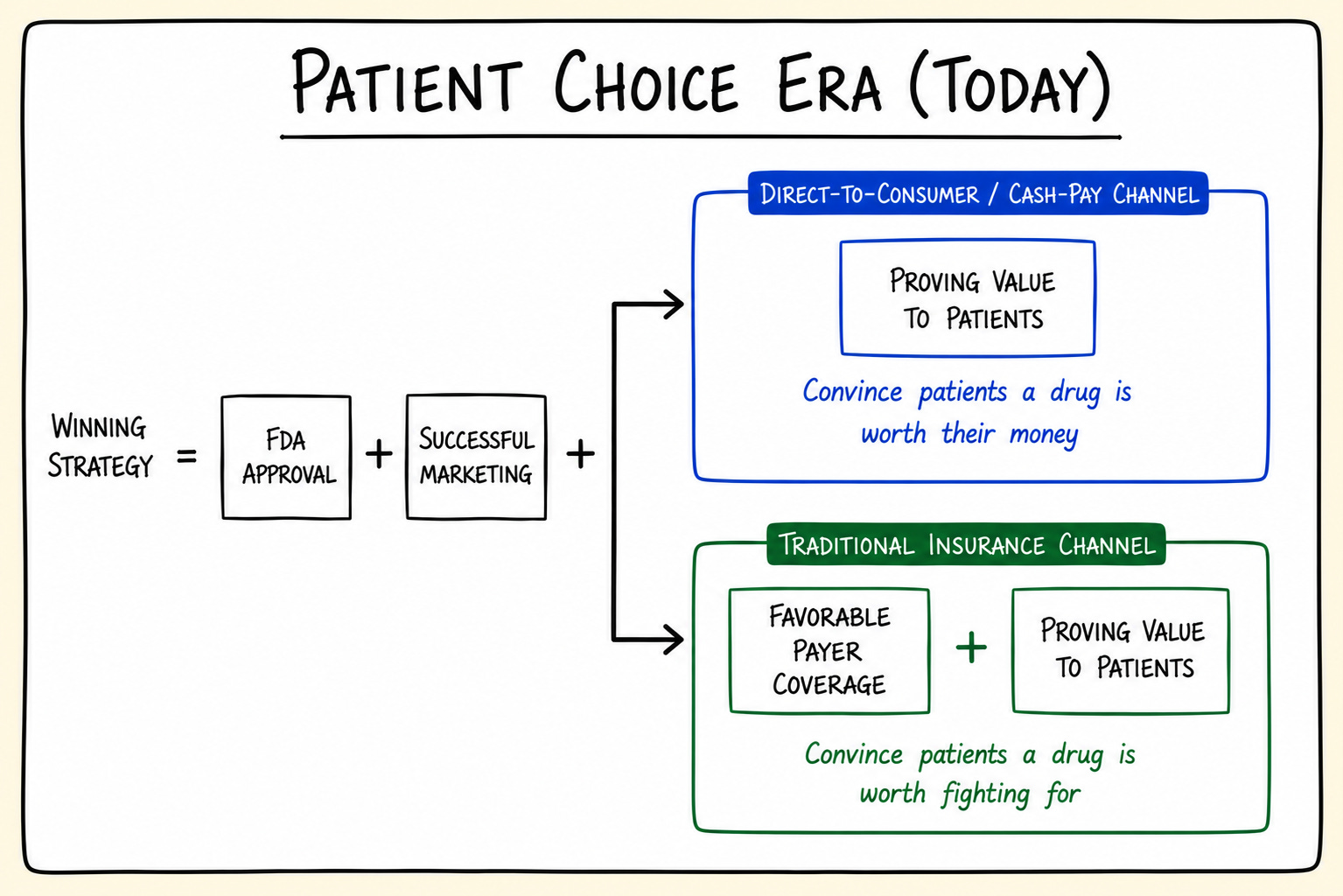
We’ve recently entered a new era. Let’s call it the “Patient Choice Era”.
In the Patient Choice Era, favorable payer coverage is still necessary but no longer sufficient. The new winning strategy includes proving to patients that a drug is worth their money, time, and effort. This is because patients now have more skin in the game: branded drugs are harder to get,1 out-of-pocket costs remain high,2 and cash-pay channels are giving patients more choice and agency in how they access drugs.3
In practice, winning strategies in the Patient Choice Era will look different for cash-pay vs. high-cost specialty drugs.
For some drugs in cash-pay channels, like GLP-1s, patients can now bypass payers and PBMs altogether. I expect this flexibility to expand to other treatment areas where payers have resisted coverage, like migraine and hair loss. For these drugs, the challenge is convincing patients that a drug is worth their money.
High-cost specialty drugs (e.g., oncology, rare disease) will remain too costly and complex for cash-pay channels. Patients will still rely on health insurance, but will need to invest time and effort (alongside their physicians) fighting for access. For these drugs, the challenge is convincing patients that a drug is worth fighting for.
In both channels, manufacturers need to convince patients their drug are worth it.
As patients invest more of their own money, time, and effort to access drugs, they will increasingly judge whether a drug is “worth it” by looking at the full package of services, evidence, and financial terms associated with treatment. This may include any support services that help patients administer therapies, the quantity and quality of real-world evidence, and any financial guarantees offered with the drug.
In the Patient Choice Era, manufacturers that build the strongest set of offerings around effective drugs will be in the best position to win.
For example, a recent IQVIA report estimated ~70% of new branded drug prescriptions in the US are initially rejected
For reference, US patients spent $98 billion out of pocket on drugs in 2024 (up 25% over 5 years)
In 2025, 1 million patients accessed Lilly treatments through LillyDirect (Eli Lilly’s direct-to-consumer platform)